
Residential · New Hampshire & Massachusetts
Ice Dams & Frozen Pipes Claims in New England
The signature New England winter loss. Ice dams and frozen pipes send water where you can't see it — and carriers underpay by scoping only what shows.
What this loss really involves
Ice Dams & Frozen Pipes, in plain English.
Ice dams form when heat escaping into the attic melts snow on the upper roof; the melt runs down and refreezes at the cold eaves, building a ridge of ice that backs water up under the shingles and into the house. That water then travels — into the roof deck, down through exterior walls, into insulation, ceilings, and window headers. By the time a stain appears on the ceiling, water has usually been moving through the assembly for days.
Frozen pipes are the other half of the winter loss. When a supply line freezes and bursts, it can release hundreds of gallons before anyone notices — especially in a vacant or second home. The water finds the lowest path and saturates everything on the way.
A complete winter claim covers the roof and ice-dam remediation, the hidden water damage inside walls and ceilings, saturated insulation, ruined flooring and finishes, mold prevention, and the code upgrades an older home triggers once the walls are opened.
Where carriers underpay
How insurers underpay a ice dams & frozen pipes claim.
Winter claims are underpaid in a very specific way: the carrier scopes the visible stain — a patch of ceiling, a section of wall — and ignores the water that traveled through the cavity. Ice-dam water is notorious for causing damage far from where it shows. If the moisture isn't mapped and documented while it's wet, it's easy for the insurer to leave the hidden damage out entirely.
Insurers also dispute cause — arguing an ice dam is "maintenance" or that a frozen pipe resulted from inadequate heat rather than a covered sudden event — and lowball the roof work needed to actually stop the recurrence. Frozen-pipe losses in vacant homes get extra scrutiny on the "was the heat maintained" question.
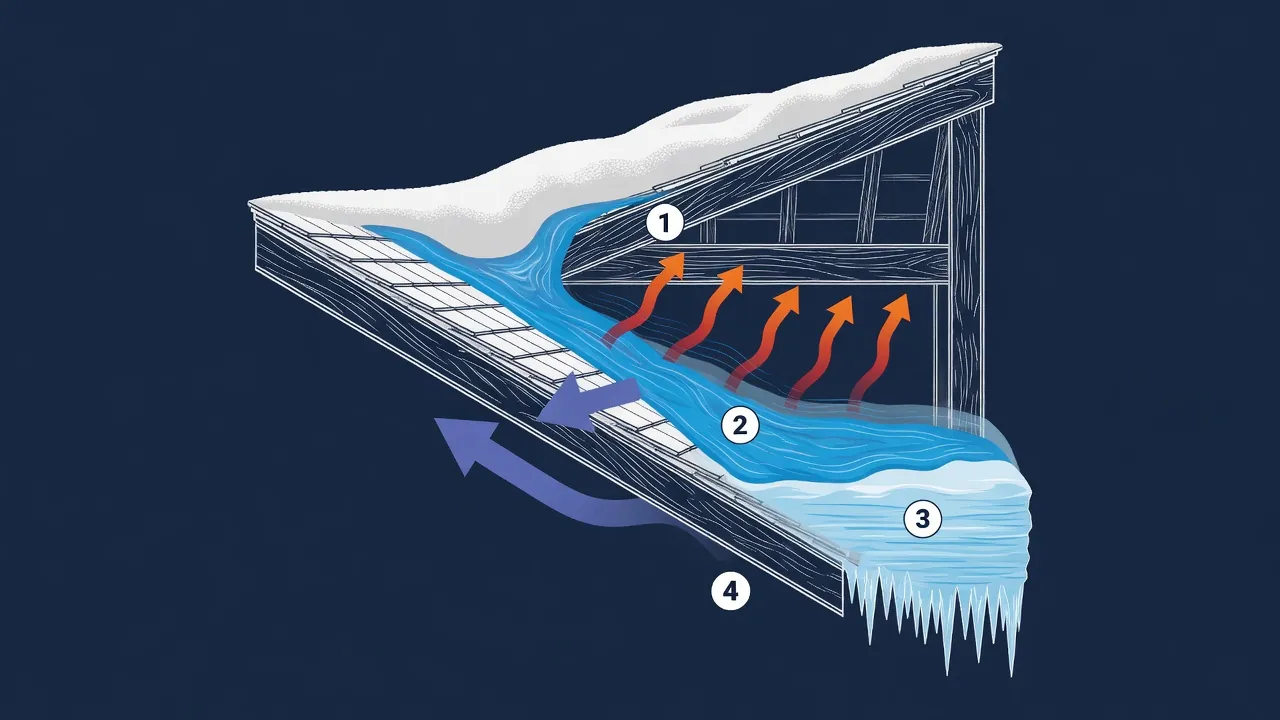
How an ice dam forces water into your home
A New England winter classic: heat escaping into the attic melts the snow on the upper roof, the meltwater refreezes at the cold eaves into a ridge of ice, and the water backing up behind it is driven under the shingles and into the walls and ceilings below.
- 1Indoor Heat Loss. Warm air escapes through the roof from the living space below, warming the upper roof deck.
- 2Snow Melts & Runs Down. Snow on the warm upper roof melts and runs down the slope as water.
- 3Ice Dam Forms. Water reaches the cold roof edge over the unheated overhang and refreezes into a thick ice dam.
- 4Water Backs Up & Leaks In. Ice blocks drainage, so backed-up water pools behind the dam, seeps under the shingles, and leaks into the home.
How SPA handles it
What we do differently.
We document winter losses the way the water actually behaves: moisture mapping and thermal imaging to find where it traveled, not just where it stained, and a photographed record of every affected material before anything is dried or torn out. That evidence is what forces the hidden damage onto the estimate.
We build the case on cause — that this was a sudden, covered loss — handle the "heat maintained" and "maintenance" arguments head-on, and scope the roof and remediation to stop it from happening again. This is the loss New England sees most in winter, and the one where documentation changes the outcome the most.
The New England angle
This is the wedge: nobody handles New England winter losses like a firm that lives them every January. Ice dams, frozen and burst pipes, and the hidden water they drive into old homes are our home turf — and the losses regional carriers most reliably underpay.
If you’ve had an ice dam or a frozen pipe, the damage you can see is almost never the whole loss. Call before it’s dried out or repaired — documenting the hidden water while it’s still wet is what protects the full claim.
Related
Other losses we handle.
Have a ice dams & frozen pipes loss? Let’s talk — it’s free.
Get a free, no-obligation claim review. Tell us what happened and we’ll tell you where you stand — honestly.
No up-front fees. We only get paid when you do.