
Residential · New Hampshire & Massachusetts
Fire & Smoke Damage Claims in New England
A fire claim is rarely just about what burned. Smoke, soot, and the water used to put it out reach far beyond the flames — and that's where carriers underpay.
What this loss really involves
Fire & Smoke Damage, in plain English.
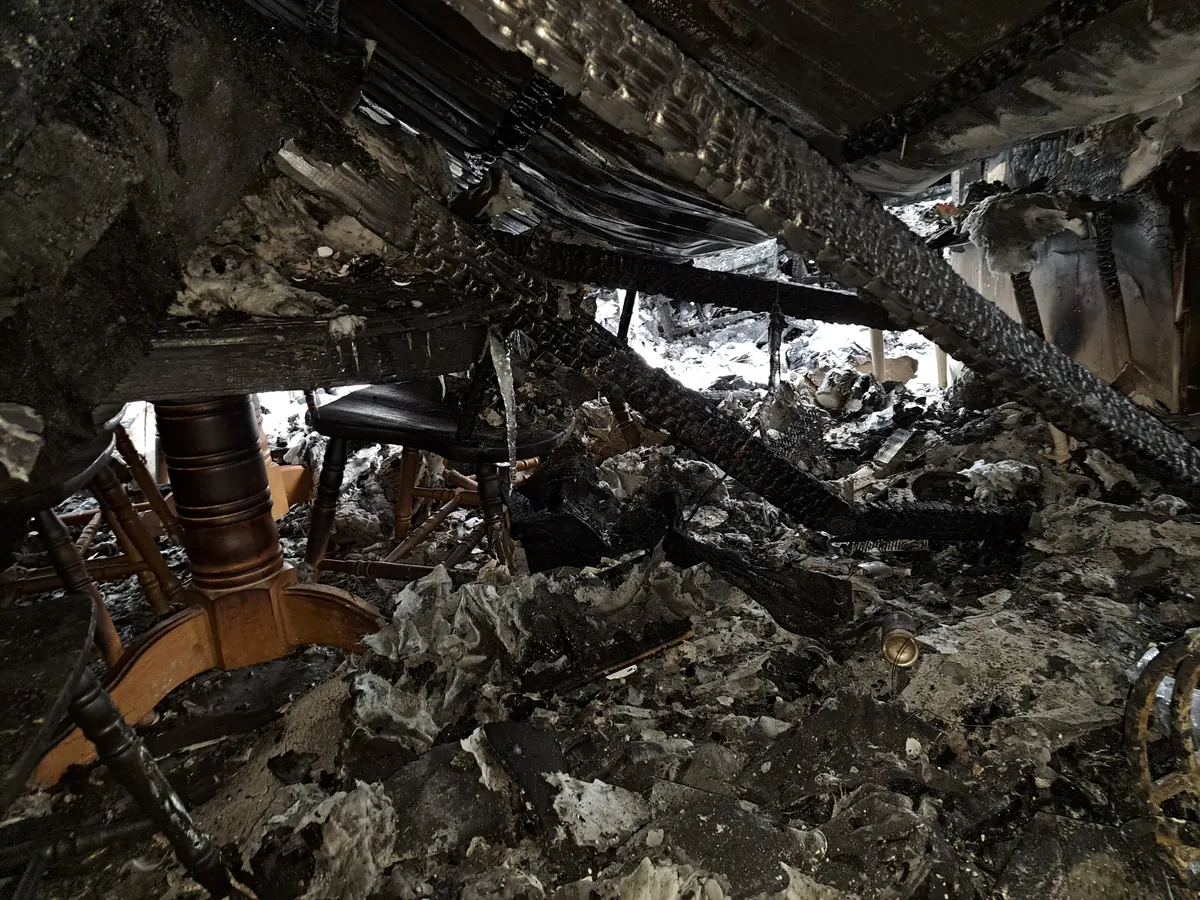
A house fire causes three overlapping losses: the fire itself, the smoke and soot that travel through the whole home, and the water damage from extinguishing it. The visible char is the easy part. The harder part is everything smoke touches — it drives odor and corrosive residue into wall cavities, HVAC systems, insulation, personal contents, and finishes in rooms that never saw flame.
A complete fire claim accounts for structural repair, smoke and odor remediation, contents cleaning or replacement, water mitigation, and the code upgrades an older home triggers once walls are opened. It also covers additional living expenses while the home is uninhabitable — a benefit homeowners frequently underuse.
Where carriers underpay
How insurers underpay a fire & smoke damage claim.
The most common underpayment is treating a fire like a localized event — paying to rebuild the burned room while ignoring the smoke and soot that contaminated the rest of the house. Carriers also lowball contents (offering depreciated cash value and hoping you won't pursue replacement cost), dispute whether odor remediation is necessary, and underpay or delay additional-living-expense reimbursement.
Fire claims are large and document-heavy, which is exactly why insurers push back. Without a room-by-room inventory and a properly built scope, a lot gets left out.
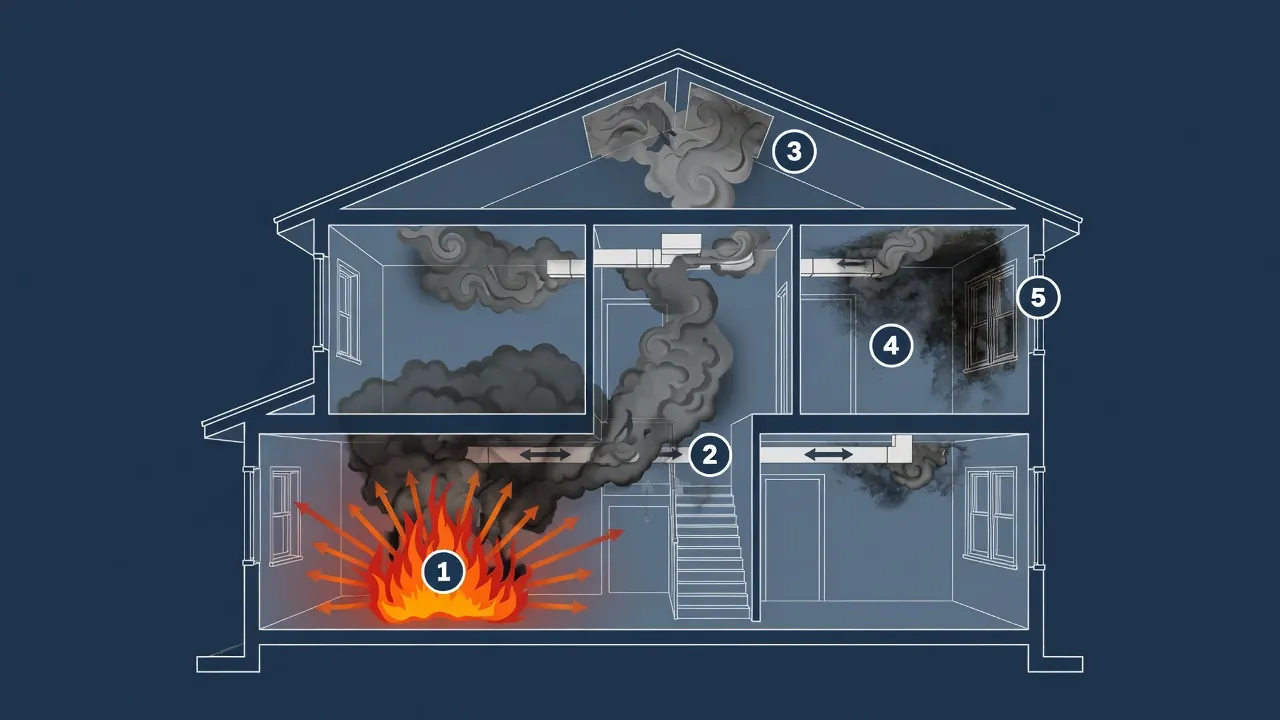
How pressurized smoke spreads through a home
Smoke doesn't stay where the fire is. Heat builds pressure and drives it through the whole structure — which is exactly the damage carriers leave out of a first offer.
- 1Fire & Heat Source. A fire ignites in one room, rapidly heating the surrounding air.
- 2Pressure Builds. Heated air and combustion gases expand, raising pressure and forcing smoke outward under pressure.
- 3Smoke Migration. Pressurized smoke pushes into adjacent rooms, up stairwells, and through the path of least resistance.
- 4Infiltration into Cavities. Smoke is driven into wall cavities, ceiling spaces, HVAC ductwork, and around outlets, door frames, and baseboards.
- 5Cold-Surface Deposition. Smoke residue settles and condenses on cooler, remote surfaces — staining and creating odor far from the origin.
How SPA handles it
What we do differently.
We scope the entire loss — structure, smoke, contents, and water — not just the burned area, and we build the room-by-room documentation that supports each line. We pursue replacement-cost recovery on contents where your policy allows it, make the case for full odor and soot remediation, and track your additional living expenses so that benefit isn't left on the table.
We deal with the carrier and their experts directly, so you can focus on your family and finding your footing while we handle the claim.
The New England angle
Older New England housing stock — balloon framing, knob-and-tube remnants, plaster walls — means smoke travels further and code upgrades hit harder. We scope for the home you actually have, not a generic one.
Fire losses are among the most disruptive a family can face, and among the most underpaid when handled alone. If you’ve had a fire, get the full scope documented before you settle — the smoke and water damage is usually where the real recovery is.
Have a fire & smoke damage loss? Let’s talk — it’s free.
Get a free, no-obligation claim review. Tell us what happened and we’ll tell you where you stand — honestly.
No up-front fees. We only get paid when you do.